A
History of Głogów
|
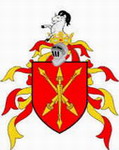
Jelita
Coat of Arms |
The Głogów area was settled in the year 1570 by
Krzystof Glowa, a secretary of the Polish King Zygmunt August, under the
coat of arms of Jelita. He named the area Glowow after his own name, which
would later be changed to Głogów.
Głogów Malopolski became the main town within the
area of Głogów. (Malopolski, a territory in the southern part
of Poland, translates as "Little Poland" in English.) Glowa
wanted the town of Głogów Malopolski to be recognized as modern,
like its neighboring town of Rzeszów. To accomplish this goal he started
to build up the city. His efforts were successful since Głogów
subsequently became recognised as the third largest city in Poland. |
After Krzystof Glowa's death at the turn of the 16th century,
the area was ruled by Mikolaj Spytek Ligęza, who was responsible for a
flourishing period of development. He not only greatly improved the city by
building a hospital for the poor (1631), and the city's first town hall (1636),
but was responsible for the construction of a wooden church (1630),and the
construction of a brick wall around the city, with towers and gates. The
perimeter wall was surrounded by trenches and moats which made it difficult for
others to attack the city.
Following the death of Mikolaj Spytek, his
brother-in-law, Dominak Zastawskiego, gained rulership of Głogów by force.
The eighteen century proved to be a "Golden Age"
for the area. Under the ruler Hieronima, Głogów, for a period. became its
own "small country", the capital of which was Głogów Małopolski.
In 1772, Prussia, Russia, and Austria all annexed parts of
Poland. The patriot Thaddeus Kosciusko led a peasant army in a national
insurrection against the Russians. In 1795 Poland's last remaining territory was
occupied and many Poles fled the country.
During World War I Russia fought Austria and Germany, usually
on Polish territory, and during this period the population suffered greatly. The
Polish leaders, gained the support of the Allies, especially France, and in 1918
an independent Poland again appeared on the map with Jozef Pilsudski as head of
state.
In 1921 a peace agreement was signed between the Soviets and
the Poles which gave Poland substantial territories in the east. The internal
political situation in Poland was not very stable, and in 1926 Pilsudski took
control as president of the republic and head of the government. He was a
virtual dictator. After his death in 1935 political unrest again developed, but
this period ended with the outbreak of World War II.
 Before the start of World War II, Głogów Małopolski served as a
market for the surrounding area. Among the population lived 900 Jews and another
14,000 Jews lived in Rzeszów. These Jews, along with other Jews from area towns
were deported to Auschwitz death camp and killed on arrival. There were no Jews
left in the area after the war..
Before the start of World War II, Głogów Małopolski served as a
market for the surrounding area. Among the population lived 900 Jews and another
14,000 Jews lived in Rzeszów. These Jews, along with other Jews from area towns
were deported to Auschwitz death camp and killed on arrival. There were no Jews
left in the area after the war..
The World War II started the first of September at 4.08 on
Westerplatte. During the 1930s Nazi Germany put forward demands for the
annexation of the free city of Gdansk. On Sept. 1, 1939, Germany invaded Poland,
forcing Britain and France (who both supported Poland) to declare war. The
German campaign in Poland was short. After 17 days of German occupation the
Soviet Army attacked Poland on the east side.
 During World War II, the Nazi's a killed over 300 Poles and 6,000 Jews in the
woods two kilometers from the city of Głogów Małopolski between
1942-1944. The largest number were killed between July 7-18 1942. The victims
were ordered to undress and stand before large pits. They were then killed by
machine guns. Many fell into these mass graves while still alive. The Nazis
poured sand over the bodies with bulldozers. Farmers living nearby reported
hearing cries and moans for several days after the massacre. Today, monuments
stand next to the mass graves to remember the Poles and Jews that were killed.
During World War II, the Nazi's a killed over 300 Poles and 6,000 Jews in the
woods two kilometers from the city of Głogów Małopolski between
1942-1944. The largest number were killed between July 7-18 1942. The victims
were ordered to undress and stand before large pits. They were then killed by
machine guns. Many fell into these mass graves while still alive. The Nazis
poured sand over the bodies with bulldozers. Farmers living nearby reported
hearing cries and moans for several days after the massacre. Today, monuments
stand next to the mass graves to remember the Poles and Jews that were killed.
During this time, the people of the community took part in
the resistance movement to fight against the Nazis. The two troops that fought
were known as the Home Army and the People's Guard. On the night of February
22-23 1943, a Polish resistance army "Iskra" invaded Głogów's
town hall where the Nazis were located. Iskra was successful in burning down the
town hall but tragically six Polish fighters were later killed for their actions
against the Nazi officials. Głogów was later liberated on July 30, 1944.
 As the end of the war neared, the Soviets began to take control of Poland. When
Soviet forces neared Warsaw in the summer of 1944, the Home Army, anticipating
Red Army assistance, launched a rebellion against the German garrisons in the
capital. Instead, the Soviets halted their advance just short of Warsaw,
isolating the uprising and enabling the Germans to crush the Home Army only
after two months of intense fighting. In retaliation against the Poles, the
Germans demolished Warsaw before retreating westward, leaving 90 percent of the
city in ruins. From that time, the Polish communists exerted primary influence
on decisions about the restoration of Poland. The Red Army expelled the last
German troops from Poland in March 1945, several weeks before the final Allied
victory in Europe.
As the end of the war neared, the Soviets began to take control of Poland. When
Soviet forces neared Warsaw in the summer of 1944, the Home Army, anticipating
Red Army assistance, launched a rebellion against the German garrisons in the
capital. Instead, the Soviets halted their advance just short of Warsaw,
isolating the uprising and enabling the Germans to crush the Home Army only
after two months of intense fighting. In retaliation against the Poles, the
Germans demolished Warsaw before retreating westward, leaving 90 percent of the
city in ruins. From that time, the Polish communists exerted primary influence
on decisions about the restoration of Poland. The Red Army expelled the last
German troops from Poland in March 1945, several weeks before the final Allied
victory in Europe.
A People's Republic was established in February, 1947, with
the Polish worker's Party. Wojciech Jaruzelski, the first polish president after
the second world war. Communism transformed Poland just as much as the war did.
In the early years of the new communist power, Poland became more urban and
industrial as a modern working class came into existence. Parts of Głogów
were rebuilt from the destruction of the war. This included the town hall.
Polish frontiers underwent a major shift after the Allied
conference in 1945. The Soviet Union retained control of the territories that it
had obtained in 1939, while Poland gained large areas of former German territory
in the west, including the industrial region of Upper Silesia, the ports of
Gdansk and Szczecin, and a long Baltic coastline. Poles from the Soviet-occupied
areas were resettled on lands in the west that had expelled Germans. Communist
control was intensified with the removal of more liberal political leaders such
as Wladyslaw Gomulka in 1949. In 1956, however, a major political upheaval led
to the return of Gomulka as first secretary of Poland's Communist party with the
support of Nikita Khrushchev, the new Soviet leader.
 In 1950, Głogów built its first fire station and the area received
electricity for the first time.
In 1950, Głogów built its first fire station and the area received
electricity for the first time.
In 1970 the authoritarian Gomulka government fell after the
eruption of bloody riots and strikes in several cities because of rises in food
prices. Edward Gierek was appointed party leader. Further price increases in
1976 and 1980 created more unrest. By the mid-1970s, nearly half the Polish work
force was made up of women. Poland offered women more opportunities for higher
education and employment, than did most West European countries. In many
households in the 1980s, women earned more than their husbands. Yet the
socialist system uniformly excluded women from the highest positions of power.
In 1989, the Russian communist left Poland which opened the
way to the massive changes and the return of Democracy. The first polish
president elected by the societ in public elections after crashing down the
communistic system in Poland was Lech Walesa. In December 1990, he was sworn in
as the first non Communist Polish President since World War II.
Poland joined the North Atlantic Treaty Organization (NATO)
on March 12, 1999. Poland became a part of a defence alliance which guarantees
security and grants conditions for stable development.
On June 7-8, 2003, Polish voters went to the polls to decide
whether their country should join the European Union. In the end almost 60
percent of the population went and cast a vote. 79.1 percent voted
"yes" to joining the European Union. On May 1, 2004, Poland was
admitted into the European Union along with nine other countries.
Glogów Facts:
Głogów (aka Gloghow,
Glogov, Gloguv and Glogau) is sited in south-east
Poland about five miles north of Rzeszów
and approximately 25 miles north-east of Lancut. It should
not be confused with the similarly named and spelt city that is situated in
south-west Poland (Lower Silesia).
The community of Głogów, which
consist of 13 villages and the city of Głogów Małopolski, covers an
area of 145.76 sq km (56.28 sq miles). The current population is 17,800 with
4,800 people living in Głogów Małopolski itself..
The thirteen villages are Budy Głogowski,
Hucisko, Lipie, Styków, Pogwizdów Nowy, Pogwizdów Stary, Przewrotne, Miłocin,
Rogożnica, Rudna Mała, Wola Chicha, Wysoka Głogowska and Zabajka.
Before the Holocaust there was an
estimated Jewish population of 900 in Głogów and the neighbouring
Shtetlach (hamlets): Budy, Wysoka, Rogoznica, Mrowla, Poreby, Majdan, Widelka,
Kamyszyn, Nienadówka, Medynia, Lukawiec, Staroniwa, Ranizów, Sokolów Malópolski.Within
the forest two kilometers south of Głogów Malópolski is a monument to the
victims of World War II.
 |

|
 |
|
Courtesy of MapQujest. Click for
larger image |
Forest monument |
Inscription on monument |
www.aufrichtigs.com
is indebted to the Town Hall of Głogów Małopolski, 36-060 Głogów
Małopolski, Rynel , for permission to reproduce all facts and pictures
relating to Głogów that appear on this page. To view all content in its
original format, please visit www.glogow.fl.pl.
.
Home Page
Alphabetical Index
Głogów Forest
Massacre
Rzeszów Ghetto
